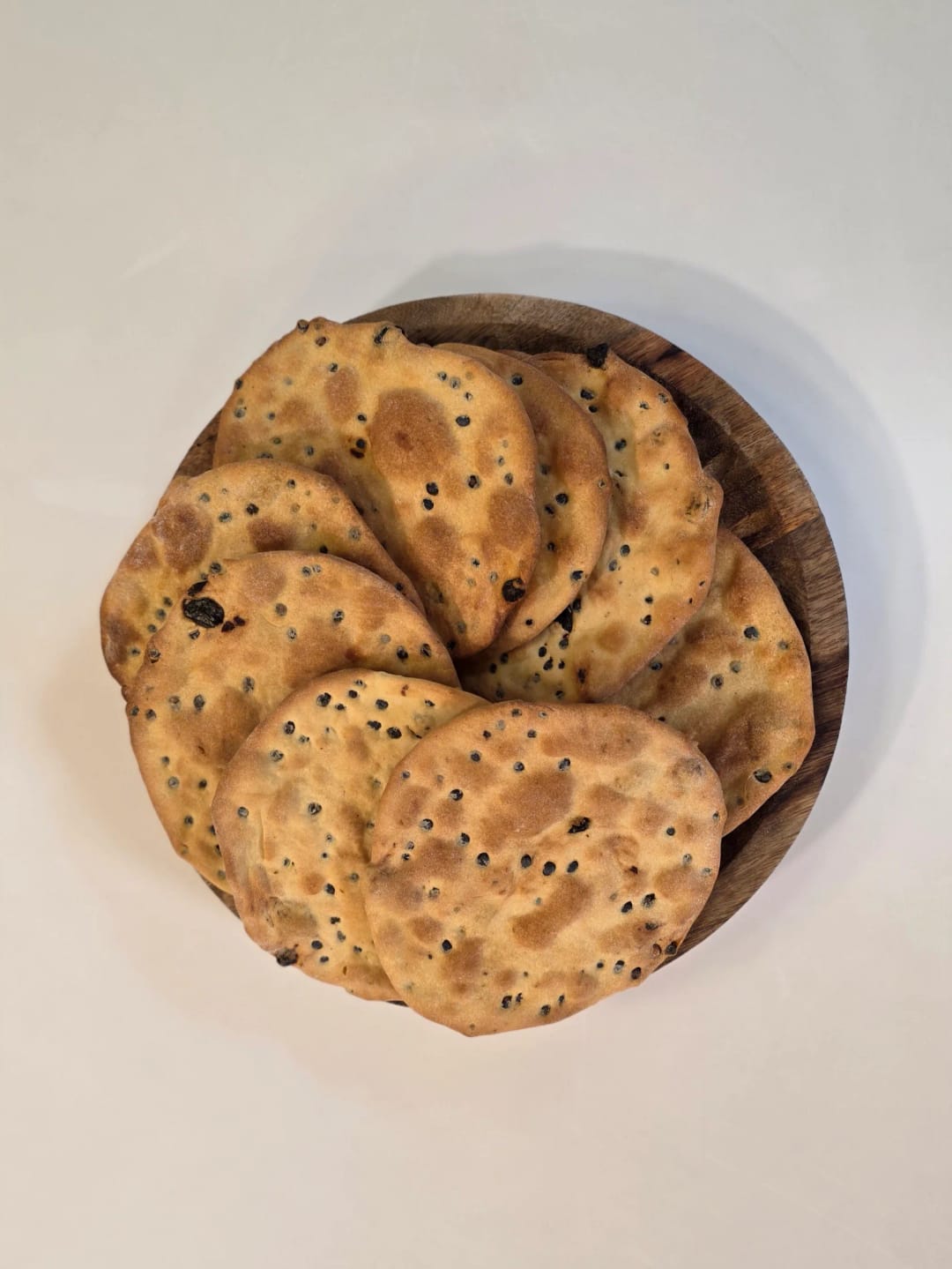
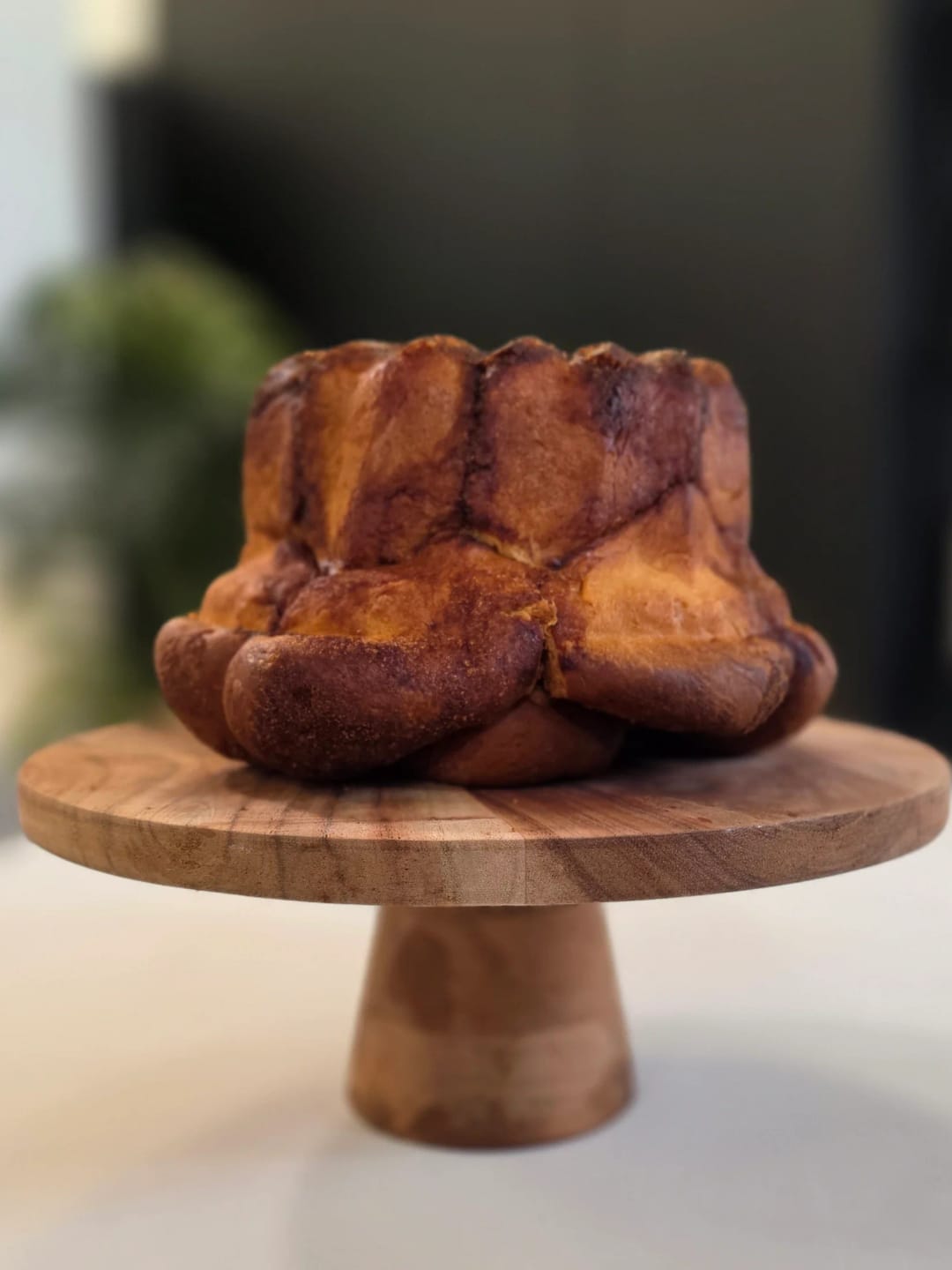
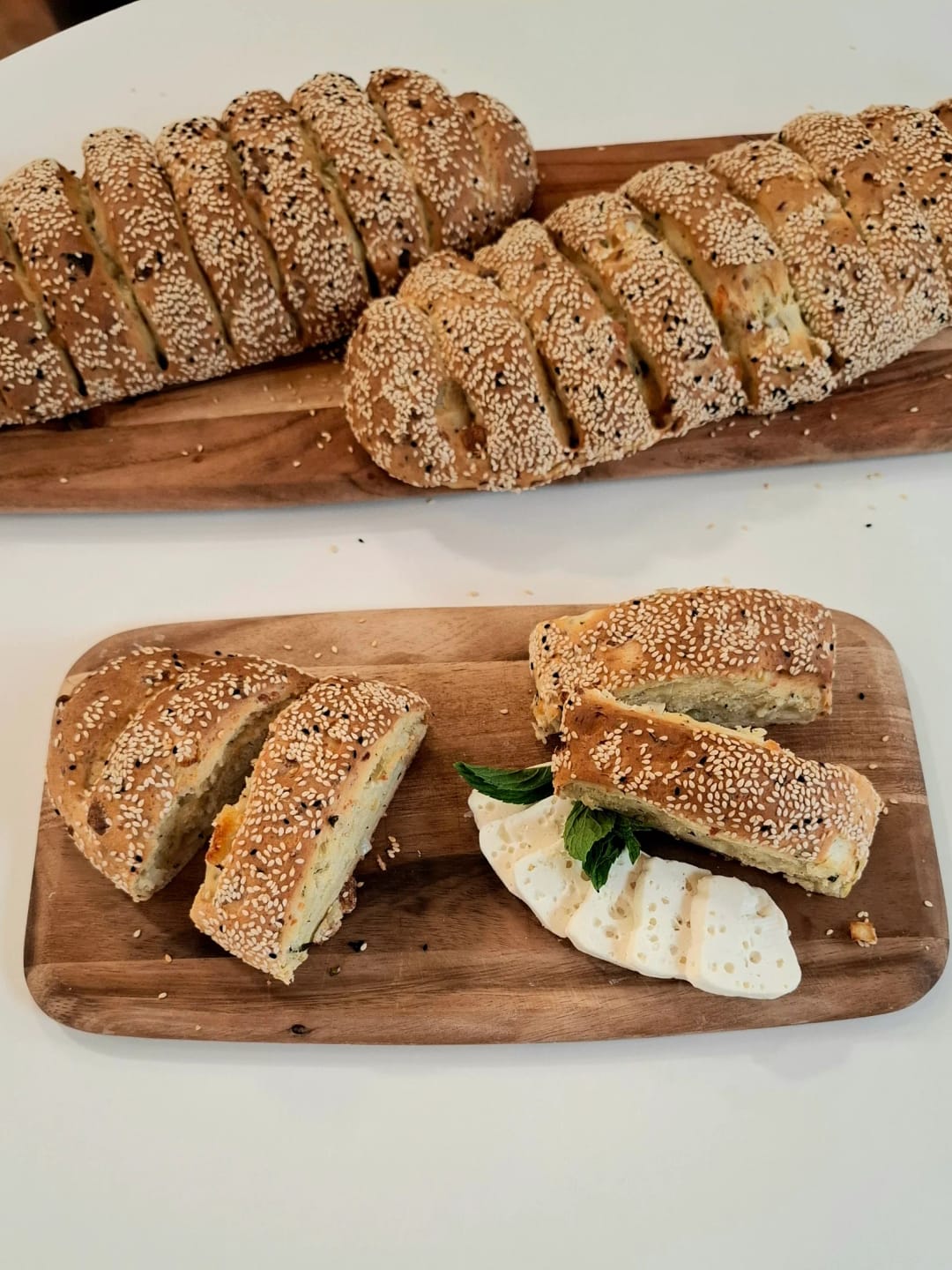
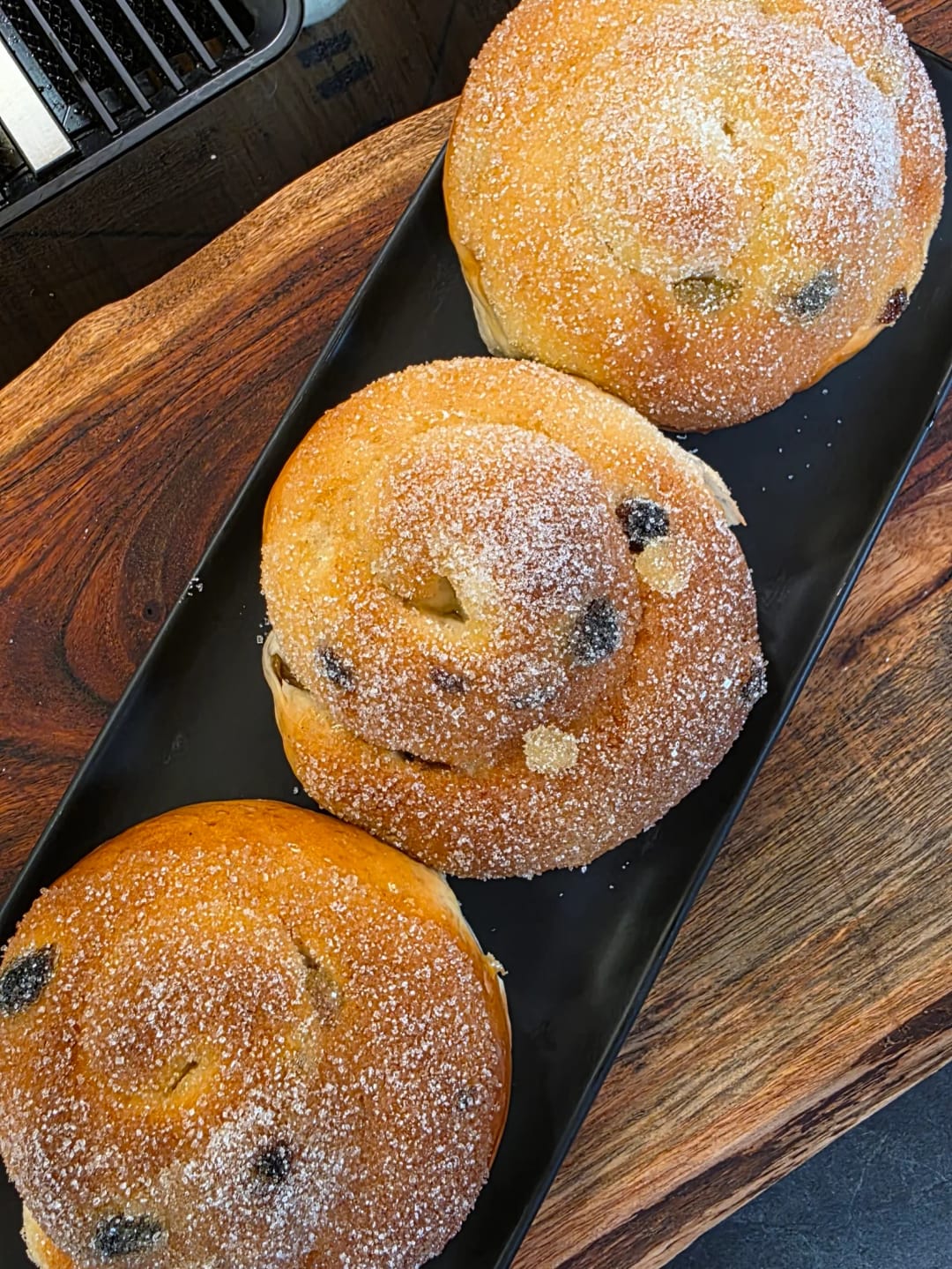
Flaounes with Sourdough Starter and Paskies - Recipe
Χρυσω Λεφου
www.chrysolefou.com
Scan for recipe
Flaounes with Sourdough Starter and Paskies — continued
●
chrysolefou.com
Flaounes with Sourdough Starter and Paskies
Recipe from Giorgoula Christodoulou, Simou Traditional Flavors Workshop
INGREDIENTS
For the Dough
•1 kilo village flour
•½ cup sunflower oil
•1 tablespoon butter (unsalted or fresh or bread or vegetable)
•1 and 1/3 cup lukewarm whole milk
•1 and 1/3 cup lukewarm water
•1 teaspoon salt
•1 tablespoon sugar
•1/3 teaspoon mastic
•1 teaspoon mahlepi (mehlepi)
•100 grams sourdough starter
•2 teaspoons baking powder or 1 teaspoon dry yeast (optional)
For the Filling (Fouko)
•1 ½ kilo cheese for Flaounes
•fresh spearmint
•1 tablespoon sourdough starter
•1 tablespoon baking powder
•eggs
•raisins (optional)
For the Paskies
•2 kilos meat for Paskies (kid or lamb, boneless as usual, cut into cubes slightly larger than for souvlaki)
•1/3 cup olive oil
•½ teaspoon black pepper
•½ teaspoon cinnamon
•1/3 teaspoon clove
•1 teaspoon salt
•3 cups dried onions sliced
•1 cup finely chopped parsley
METHOD
For the Flaounes:
1. The night before, grate the cheese and put the flour in. Rub the flour against the cheese so it picks up the cheese aroma and absorbs the moisture. Spread it on a towel and let it air out a bit.
2. The next day, one hour before kneading the dough, prepare the filling (fouko).
3. Add the sugar to the grated cheese (it helps the filling rise more easily), the sourdough starter, gradually add the eggs, and knead well.
4. The filling should be soft, neither stiff nor runny, just medium consistency. If it's stiff, our flaounes will be hard when baked.
5. When we finish kneading, crack an egg and spread it over the surface of the filling to keep it soft and prevent it from drying out. Let it 'rest' and rise.
For the Dough:
1. Start kneading in about an hour. In a basin, combine the two types of flour, salt, sugar, yeast, sourdough starter, and lukewarm water, and knead well. Let the dough rest for half an hour.
2. Add the butter and knead well again, until the dough absorbs all the butter and becomes a nice dough (it shouldn't be too slack, slightly firmer so the flaounes don't spread. Of course, if you are making paskies, the dough should be a bit slack). Cover and leave in a warm place for about 1-2 hours or until the dough has risen.
3. Before starting to fill the flaounes, add the coarsely chopped spearmint, raisins, baking powder to the filling and knead well to combine the ingredients. Cut the dough into small balls the size of a small orange. Roll out the dough thinly (like a fruit plate size). Dip the outer side of the dough in sesame seeds and the inner side in egg.
4. Take some filling and shape it into a small ball, like a small orange, place it in the middle of the dough. Fold all the edges of the dough in such a way that the filling is not completely covered on top. With a fork, press the edges of the dough so they stick well. Follow the same procedure until finished.
5. Brush the flaounes with egg. Let them rest for 30 minutes. When putting them in the oven, brush them with egg again. Bake in a preheated oven at 180 degrees for about 35-40 minutes. The baking time depends on how large the flaounes are and how strong the oven is.
For the Paskies:
1. The day before, fry the meat very well in olive oil. At the end of the cooking, add the spices and salt, stir for 1-2 minutes, and add plenty of onions.
2. Let them cook well, and as soon as they start to brown, add the parsley. Stir for 1-2 minutes and remove from the heat. Place the meat in a colander to drain excess oil and put it in the fridge until the next day when you will make them.
3. Roll out the dough slightly thicker than for the flaounes. Dip the outer side of the pastry in sesame seeds. Place one spoonful of the filling (fouko) on half of the dough and spread it. On top, place pieces of meat, and on top of that, another spoonful of the filling (fouko) and spread it to cover the meat.
4. Fold and close the paskia, like making kolokopites (kolokotes). You can also make them round. Open 2 sheets of dough. First, place one spoonful of filling, on top the meat, and on top a little more filling.
5. Close with the other sheet of dough. Brush with egg and set aside for half an hour. Bake in a preheated oven at 180 degrees for about 40-45 minutes.